
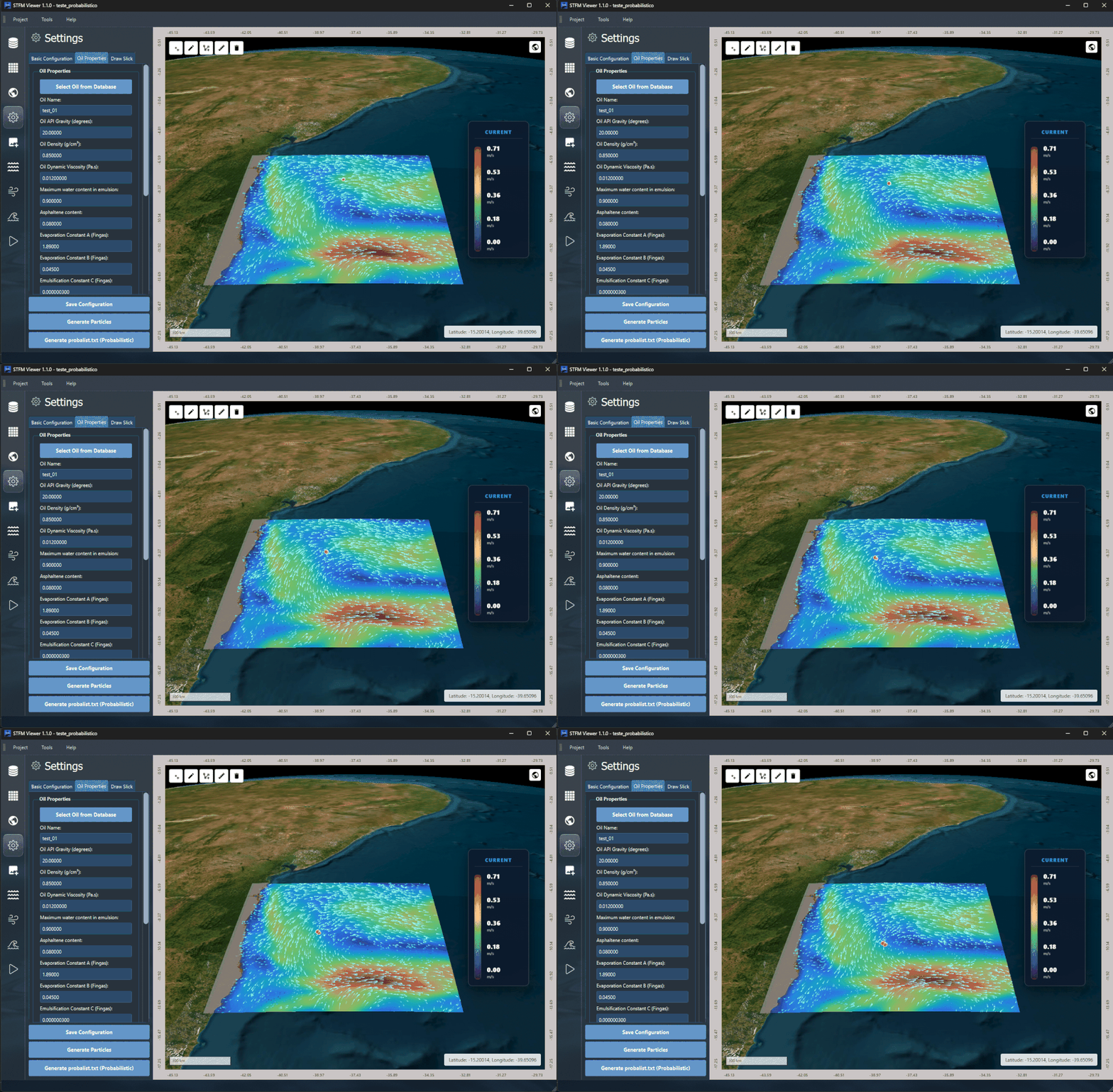
Currents, animated
Watch current velocity evolve across the grid before you even run a spill.
3D Transport & Fate Model
STFM simulates how oil and other contaminants move through water from the first meters of a near-field release to far-field dispersion across currents, wind, and tides.
Developed at the University of São Paulo
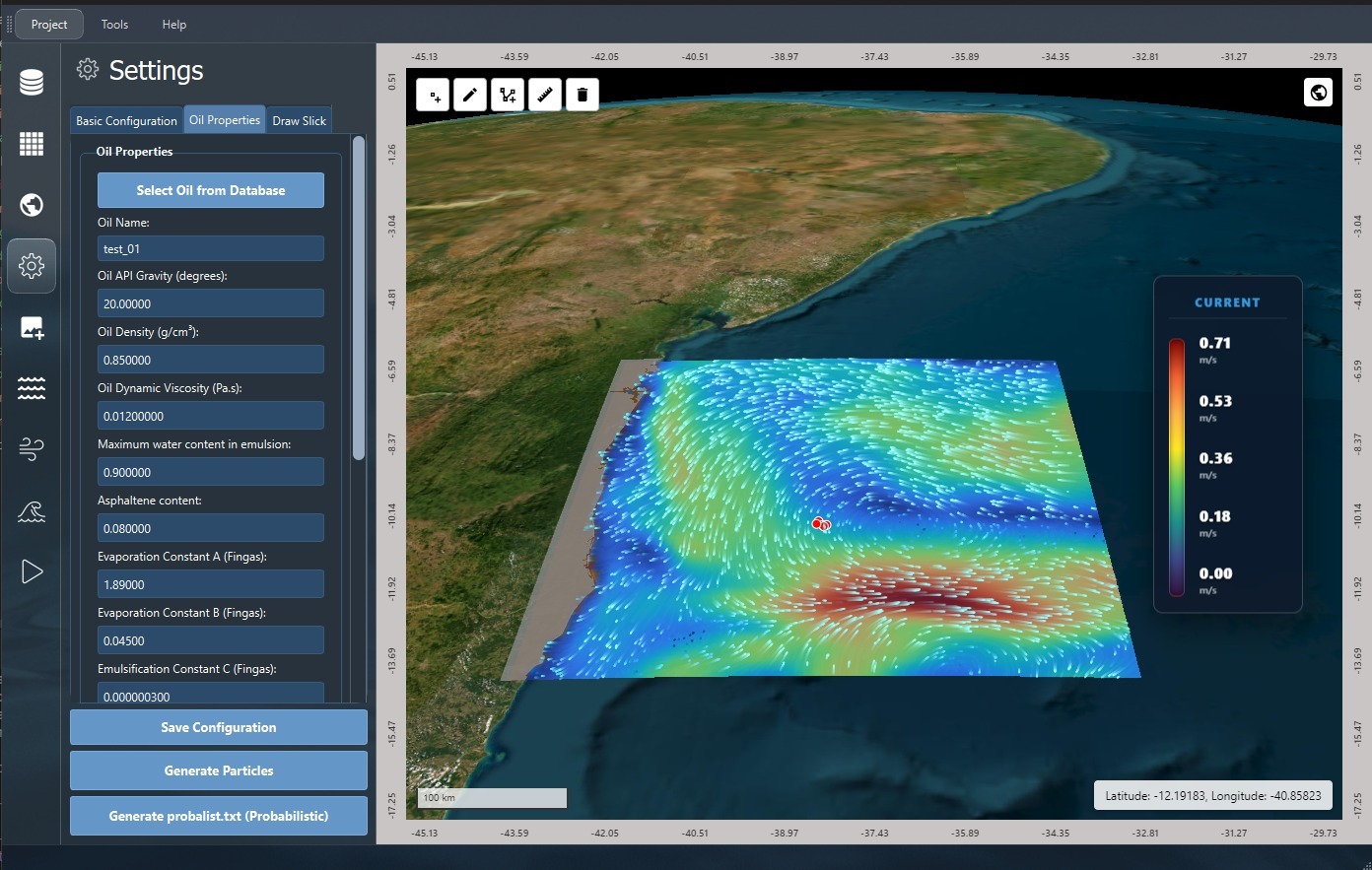
Viewer Features
Every simulation comes with a built-in viewer animated current fields, particle-by-particle drift, and a full weathering breakdown, ready to explore without extra tooling.
Watch current velocity evolve across the grid before you even run a spill.
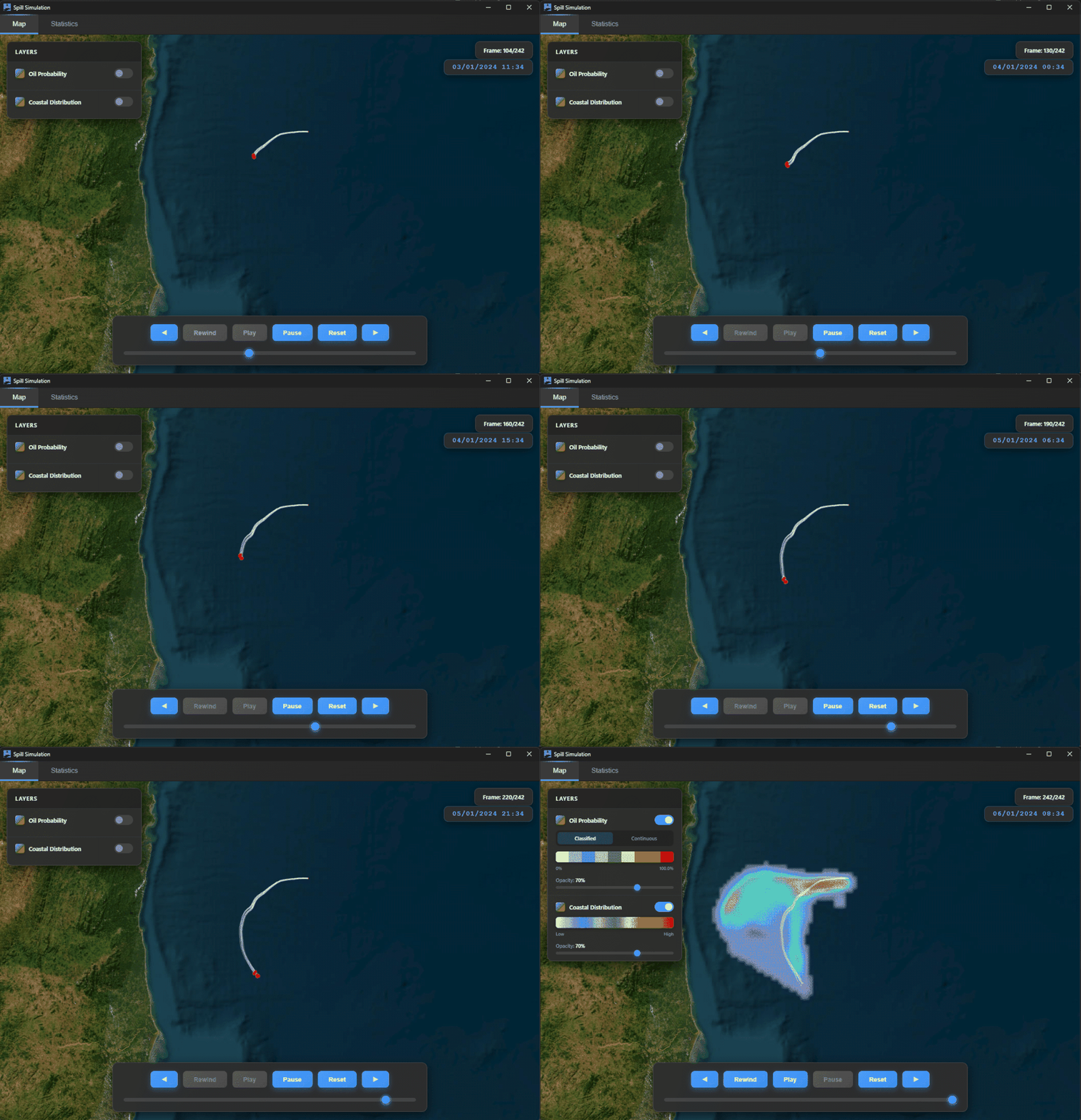
Step through the slick's trajectory as currents, wind, and waves carry it forward.
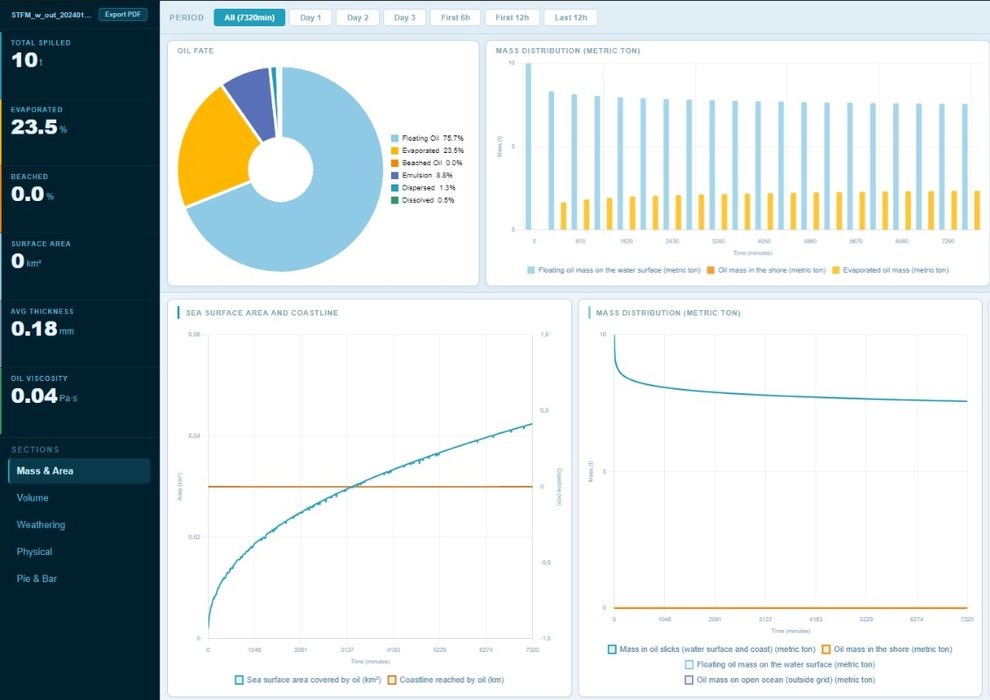
Mass balance, evaporation, and coastal impact charted and exportable to PDF.
The Model
Most transport models are tuned for one regime. STFM moves between both, so the same release can be followed from the outfall to the open coast.
Captures the turbulence and buoyancy that dominate close to a release, where jet and plume behavior set the starting condition for everything downstream.
Learn MoreTracks advection and dispersion outward across hours to days, driven by ambient currents, wind, and tidal forcing rather than the source itself.
Learn MoreBuilt on peer-reviewed Lagrangian particle-tracking methods, developed and tested against academic research at the University of São Paulo.
Learn MoreApplications
STFM output is meant to be read by people who have to act on it responders, licensing teams, and researchers alike.
Trajectory forecasts to guide containment and cleanup decisions in the field.
Learn MoreSupporting evidence for impact assessments and regulatory submissions.
Learn MoreMapping exposure around ports, terminals, and coastal infrastructure.
Learn MoreA working platform for studying transport and fate processes in water.
Learn MoreGet Started
Follow the guide to set up SisMOM, or jump straight to the download.